
Lately, I have been thinking this topic a lot. Integrity is something that we come across each and every day in our lives in one way or another.

Through occupational training, I have gained “an aseptic conscience.” It comes from the OR nursing world and is like integrity: do have to do what is right even if no one is watching. This concept of aseptic conscience is something that has followed my ethics for over the past two decades. Integrity has been around even longer than that.
As I mentioned, we come across integrity every day. If you are a parent or a grandparent, you need to adhere to the rules of parenting even if others don’t see. Not because it is mean, or even expected from you, but because being consistent and having that integrity teaches the child valuable life lessons. It means that even if something doesn’t go their way, they can always trust that the adults around them behave with a set of rules.
But do these rules of childhood apply the same when we grow up and move away from home and into our working life? Come to think of it, isn’t it peculiar that nursing students need to be reminded that integrity is not voluntary when it comes to patient care. Also, if these aseptic conscience studies are applied to nursing students, should they be applied to other students as well?
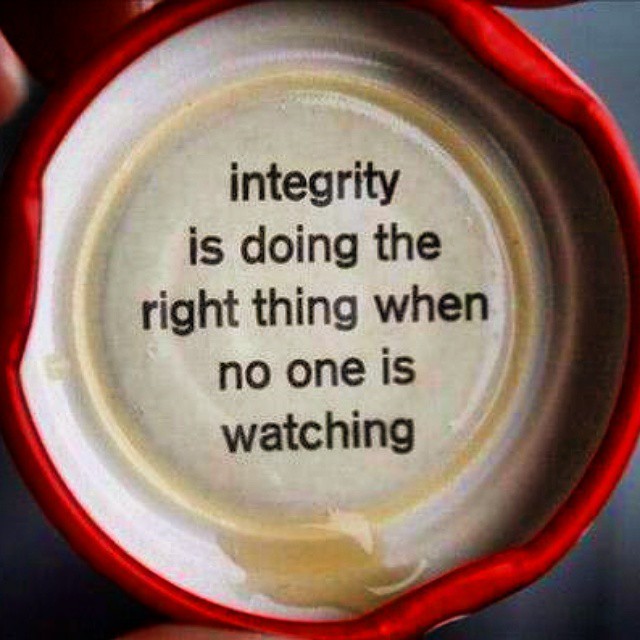
If we applied these principles of integrity straight from childhood through the school and studies into our work life and then to supervisory positions, would it make a difference with workplace culture? Would it help to cull down toxicity in workplaces and the arbitrary behaviour of the managers? At the same time, would these integrity studies improve the results of the company, as everyone from top to bottom could trust that everyone else is pulling their weight and playing with the same set of rules?
Why do I say this?
It is often thought that grandparents have some sort of automatic right to pamper their grandchildren. The rules of upbringing don’t automatically apply to them because they are, well, grandparents. As such, it is OK to give a bit of extra leeway for the children.
Therein lies the problem: the parents are trying their level best to bring up the children to face the world as it is today. The grandparents work with different mentality, seeing the world as it was when they were raising their children. So in that way, they are also doing their best to guide the crandchildren.
But this attitude does not work in workplaces: work, to be efficient and rewarding to all parties needs standard operating procedures, sets of rules that can be trusted, and the knowledge that the supervisors will have my back if I follow those rules. And when this integrity breaks, the problems begin.

As a person, having integrity can lead to conflicts, especially in settings where these common sets of rules don’t apply. This can, over time, cause discontent or even burnout if the issues are not dealt with. At the same time, those with higher levels of integrity tend to leave the workplace and seek out new places where their expectations are met.
In family settings, these situations can result in fights and even breaking up relationships because the sides do not see a common ground.
That is why we all should take a moment to reflect on our practises and practise integrity.









Leave a Reply