Last year, I decided to do a picture challenge for Ramadan – the Holy Month. But for this year, I wanted to do something different, something for you, as a non-Muslim or a recent revert, to gain knowledge about Ramadan.
In the Name of Allah, the Beneficent, the Merciful. All praise is due to Allah, the Lord and Creator of the worlds. To Him, we turn in repentance and ask for guidance. Upon Him, we rely, and to Him, we will return. Oh Allah, bless Muhammad, Your Messenger and Prophet, his family, his Companions, and all who follow Your guidance.
You might be wondering about the start of this blog. This is to remind me, as a writer, that everything I do, I do for His sake. I hope that this will be of help, of importance, and for knowledge.
Ramadan? Is it a month?
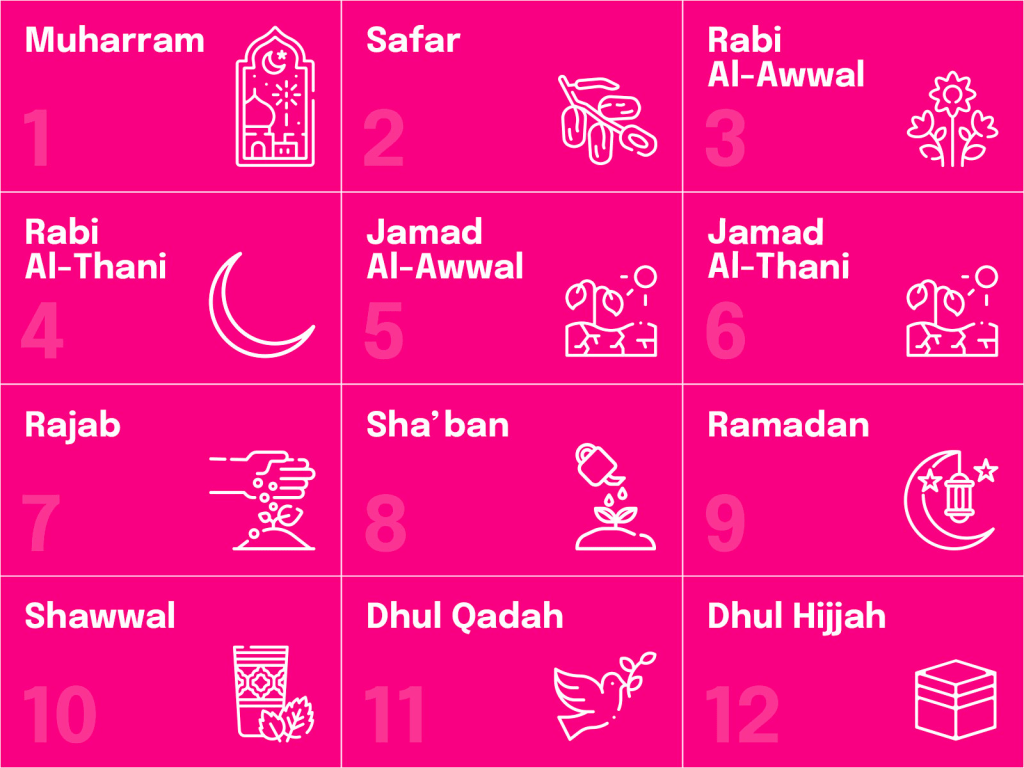
Ramadan is the ninth month of the Islamic lunar calendar, which is also known as the Hijri calendar. The name, Hijri, you might have heard before – it marks the move that the Prophet Muhammad (peace and blessings upon him) and his followers made from Mecca to Medina. That event marks the beginning of the Islamic calendar.
Hijri calendar is a lunar calendar, which means that it moves roughly nine to ten days earlier each year. This is because a lunar month is shorter than the Gregorian calendar many of us are accustomed to.
It was also during one particular night on Ramadan, when a distressed young man, Muhammad ibn Abdullah, climbed to a mountain near Mecca. Sitting alone in a cave, he felt an invisible presence all around him. It felt overpowering, yet comforting, and it revealed itself to be the angel Gabriel (Jibreel in Arabic), who had been sent by Allah to give him the last of the messages for the whole mankind. Over the course of the next 23 years, the message was delivered and compiled as the Holy Qur’an.
What is the significance?
Ramadan, for all Muslims all around the world, is a blessed month, being of great benefit to us in both this life and the next. It is the month of fasting, prayer, reflection, and remembrance of Allah, the Exalted. It is a chance for us to draw close to Him and re-discover the purpose for our existence. Anyone who fasts the whole of the month of Ramadan sincerely and correctly will have their previous wrongs forgiven.
As mentioned before, it is obligatory for any adult Muslim to fast (Sawm in Arabic) during this month, as it is one of the five fundamental Pillars of Islam. But the fast is more than just abstaining from food and drink for the time between the break of dawn (fajr) and sunset (maghrib). The fast also includes abstaining from smoking, intimate moments between spouses, gossiping, swearing, and getting annoyed and angry. All in all, as happy as we Muslims are when Ramadan approaches and begins, it is a lot of work. Can you imagine how difficult it gets when you actually work during Ramadan?
Is everyone fasting?
As the fast is one of the Five Pillars, it is obligatory for every person who has reached the age of puberty, is of sound mind, is Muslim, is capable of fasting and who knows that the month of Ramadan has started.
But, of course, there are those who can’t fast. They are the ones who have permission not to fast, and those who are not allowed to fast.
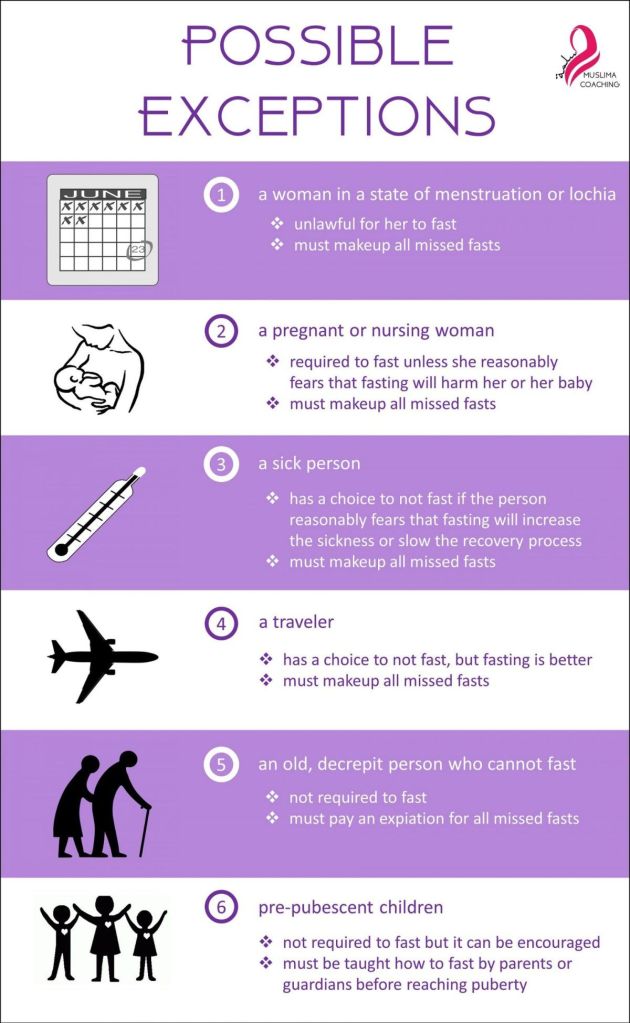
The following people are not allowed to fast: anyone who is menstruating; bleeding following childbirth; too weak or ill to fast, to the extent that it is feared that they will die if they do not break the fast; and pregnant or nursing women, who fear that they or their babies will be harmed if they fast.
Those who have permission not to fast are: people who are travelling a lengthy distance (unless the journey starts after dawn); those who are sick, pregnant, or breast-feeding and have reason to believe it may harm themselves or the child; those who are overwhelmed by hunger or thirst and those who have to take medicine between Fajr and Maghrib and cannot avoid doing so.
Breaking the fast before sundown
There are times and situations that require one to break their fast before intended, that happens. If this is the case, whether you have a valid reason, like taking a medicine, or you just don’t want to fast, you have to make up the missed fast as soon as possible, and in succession. The only people who are freed from this repayment are children, the insane, and those who were not Muslims at the time of the fast.
I think it is also worth noting that if a fast is broken without a legitimate reason, one must make the days up as soon as possible, and also, depending on the reason, the person may have to free a slave, fast for two months in a row, or feed 60 poor people.
Iftar and Sohoor – time to eat
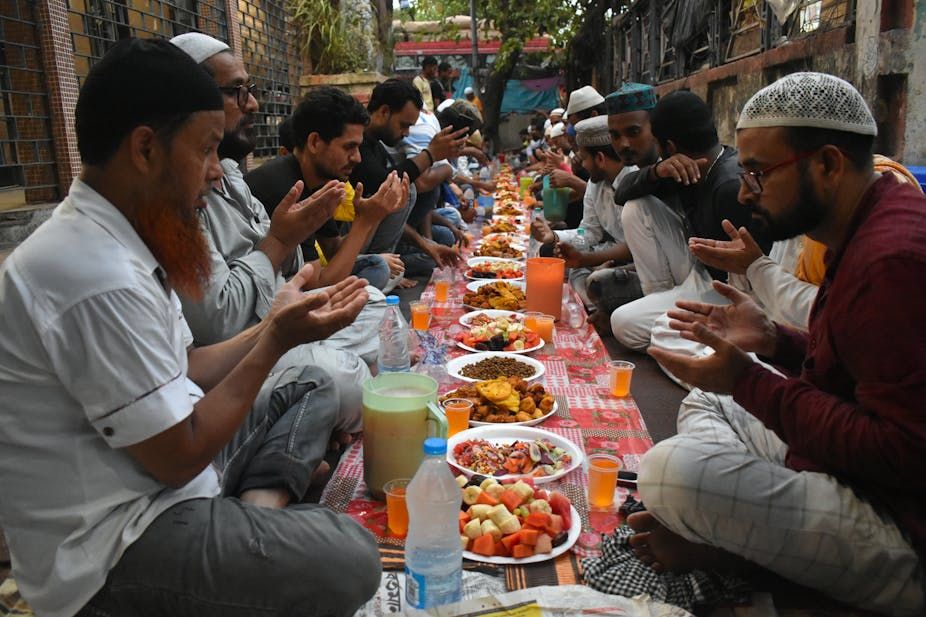
The moment when the Call to Prayer marks the start of sunset, or maghrib, it is time to break your fast. The feeling is indescribable; the first sip of water or milk going down the food pipe, followed by three dates giving you the boost of energy your body needs just at that moment. But this is just an appetizer.
Iftar is the main meal after breaking the fast and performing your maghrib prayers. Missing or delaying this meal does not invalidate the fast, as the fast is already over, but it is strongly disliked to do so. It is also recommended to provide Iftar for other fasting people and to eat with them if you are able to.
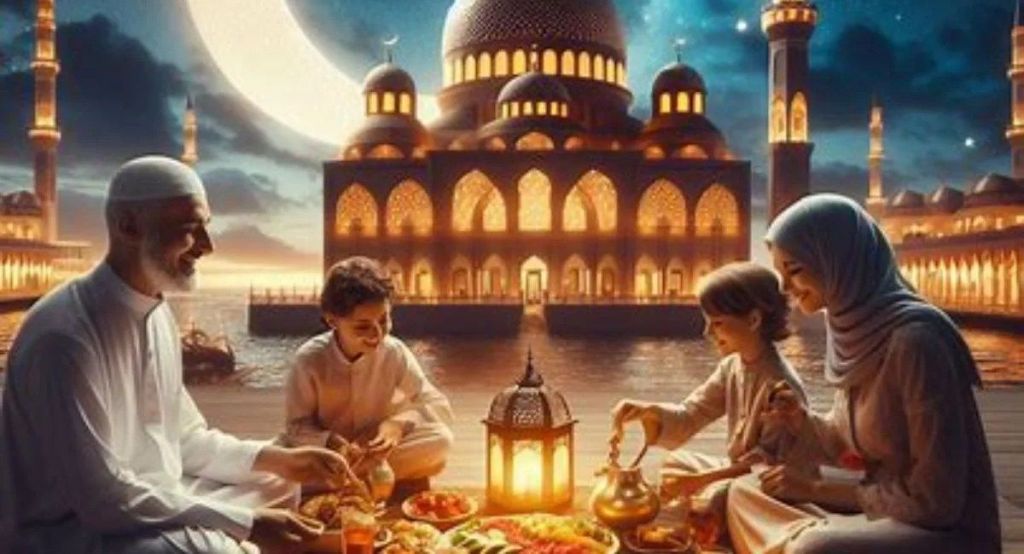
Suhoor is the meal taken before the beginning of the fast in the morning before the Fajr prayer. It is recommended to delay Suhoor to the latest time possible, close to dawn, as long as eating does not continue past the beginning of the time for the Fajr prayer. Scholars advocate to abstain from eating several minutes before Fajr time to allow the mouth to clear of any food remnants. This meal was emphasised as important by the Prophet (peace and blessings be upon him) due to its blessings. It does not invalidate your fast if you miss Suhoor, but it might make you hungry during the day.
That’s it?
No, there is much more to Ramadan. Muslims are encouraged by the example set by the Prophet Muhammad (peace and blessings upon him) to give more charity during Ramadan, especially during the last ten days of it.
We Muslims have to pay Zakat-ul-Fitr, a special charitable payment before the end of Ramadan. This payment will provide a meal for someone who is in need.
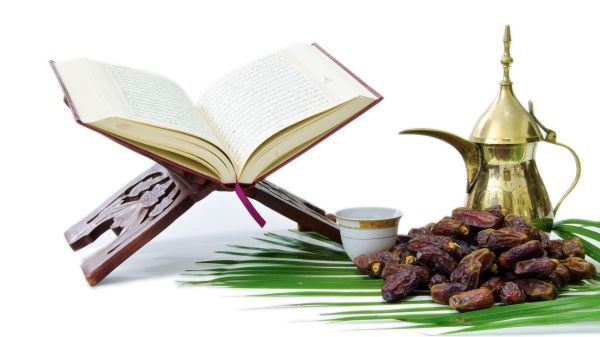
We are encouraged to attend extra nightly prayers, called tarawih, at a mosque and to spend a full 24 hours (‘itikaf) in a mosque during the last ten days of the Holy Month.
We are also encouraged to make extra prayers and pleas during the odd nights on the last 10 nights of Ramadan, as one of them is the Laylat-ul-Qadr (the Night of Power). This is the night when Angel Gabriel (peace be upon him) descended to Earth to give the first revelation to the Prophet Muhammad (peace and blessings be upon him).
I hope that this text has given you insight why we Muslims are excited about Ramadan, and if you want to know more, just leave a comment for me!
Ramadan kareem!





 Travelling Thoughts
Leave a reply to Beyond No Food: Ramadan at Work – Travelling Thoughts… Cancel reply