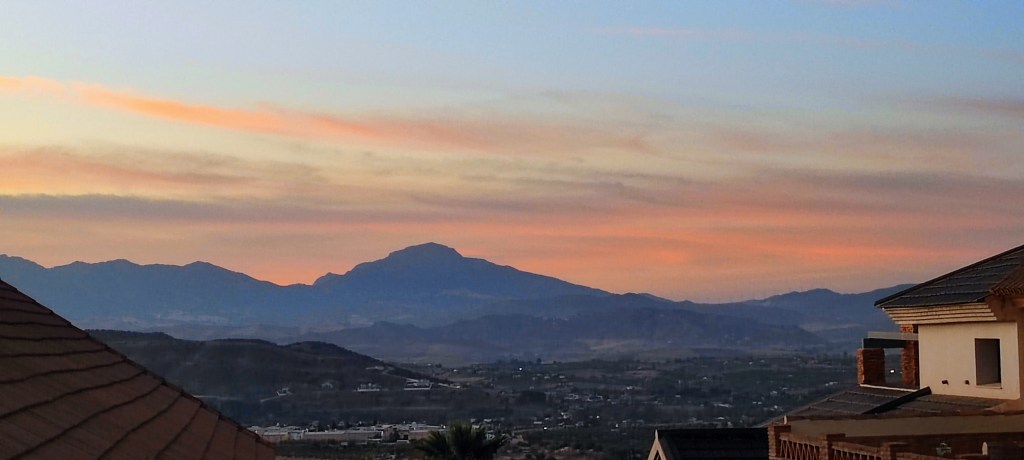
This is something I have thought long and hard, have written some pieces of it, and now I am updating something I first wrote back in 2022. Several years have passed since then, but the topic still haunts me as the modern times have not calmed down, rather more turbulent.
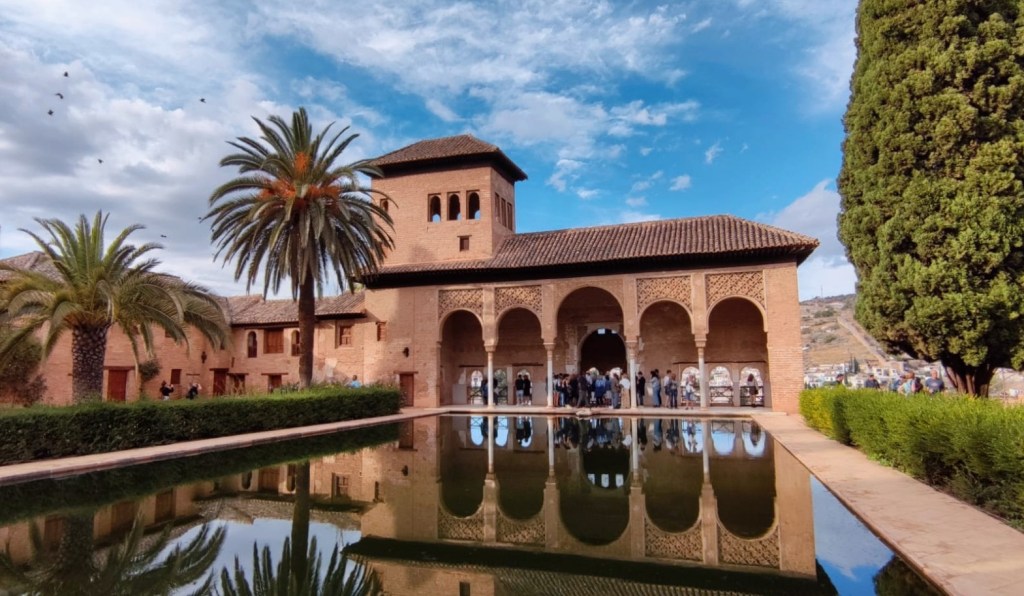
The Road From Rome to the Caliphate
To understand where we are going, we have to look at the foundations on what we are currently standing. In the time long, long ago, before the modern borders of Spain and Portugal existed, the Iberian Peninsula was a Roman stronghold known as Baetica and Hispania. The Romans gave us more than just the idiom “all roads lead to Rome”—they provided the skeletal structure of our modern legal systems and the concept of the Senate.
My fascination with these “hidden histories” actually led me to write my very first novel—a story of an LGBT love affair set against the backdrop of ancient Pompeii. It’s a look at how love persists even within the rigid structures of an empire that built the very roads we still walk today. You can buy it from here.
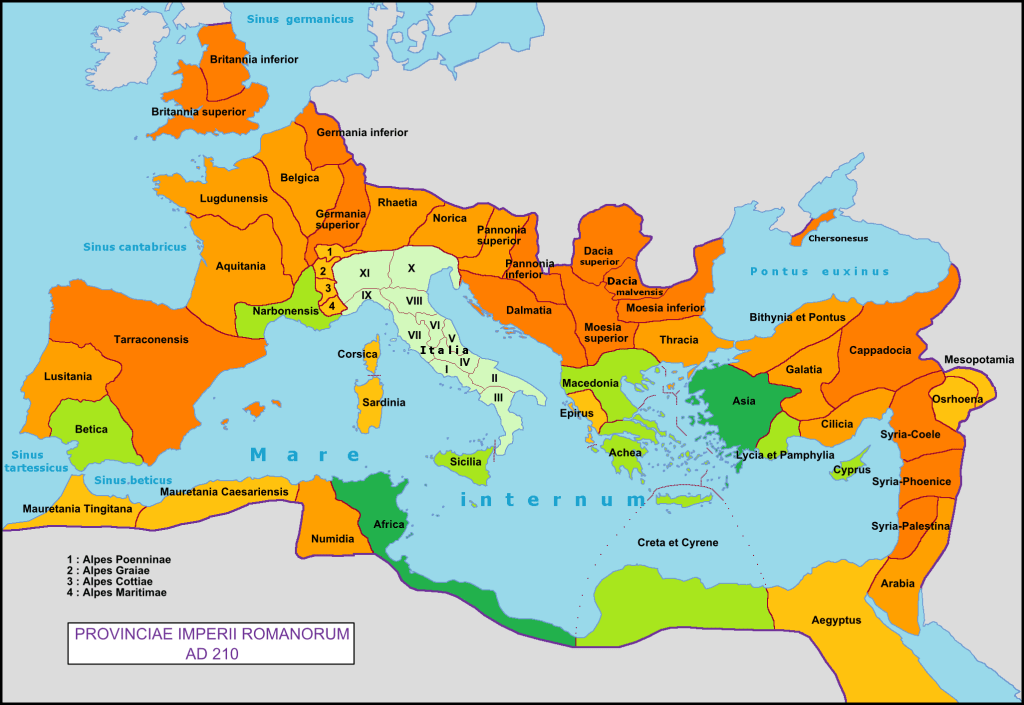
However, when Rome fell in 480 AD, it left a power vacuum stretching across most of the area that we now know as Western Europe. Whilst the Eastern Roman Empire, also known as Byzantium, survived in Constantinople, Hispania at the other end of the old empire became a patchwork of tribal territories until the Visigoths took control in the 500s.
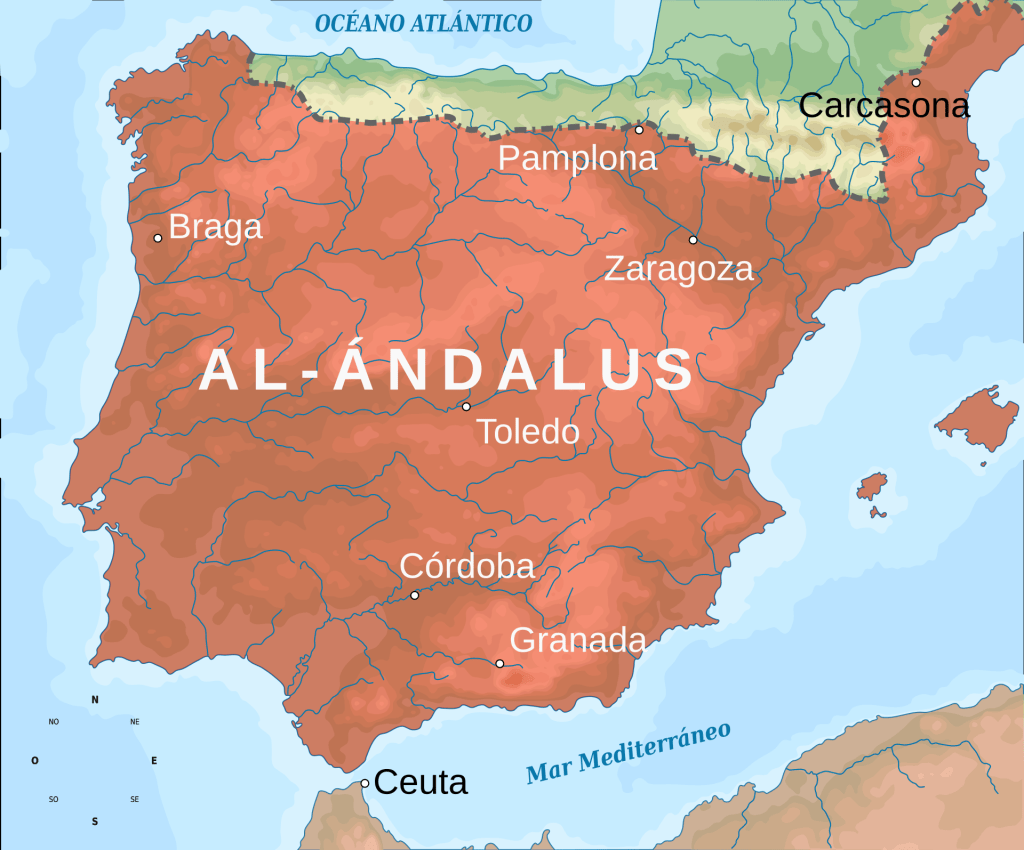
Then, the world shifted profoundly. Following the revelations of the Prophet Muhammad (PBUH), a new civilization surged from the Arabian Peninsula. By 711 AD, Muslim forces crossed the Strait of Gibraltar. Within a decade, they established Al-Andalus, a territory that, at its peak, reached toward the Alpine passes and thr shores of northern Italy. For over 700 years—until the fall of the Alhambra in 1492—this was the heartbeat of Islamic Europe.
The “Convivencia”: A Blueprint for Coexistence?
We often view history through a lens of constant warfare, but Al-Andalus offered a different model: Ahl al-Dhimma (the People of the Covenant).
Under this system, Christians and Jews were granted legal protection and religious freedom. While it wasn’t a modern utopia, it was a era of remarkable stability compared to the rest of medieval Europe.
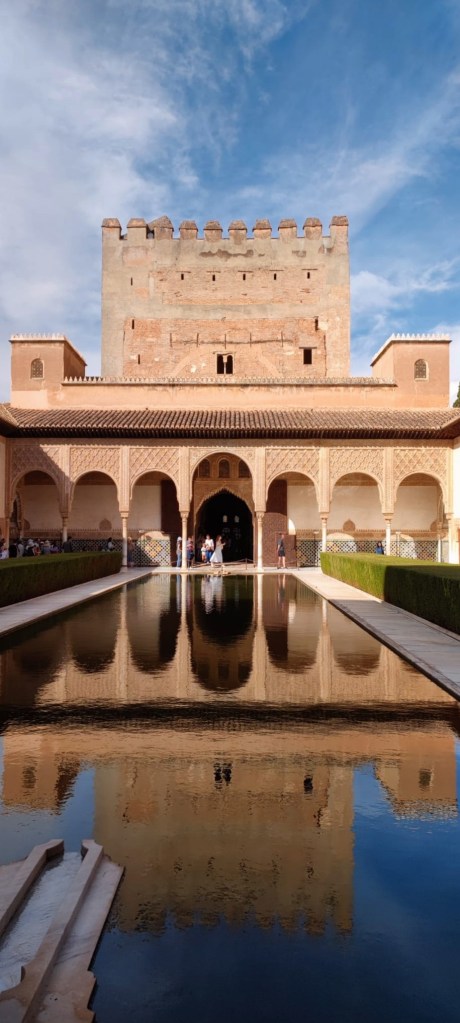
Unlike under the Roman rule when Jews were, at times, persecuted, Al-Andalus became a sanctuary for Jewish refugees fleeing persecution they faced elsewhere. The tolerance, and acceptance brought around a Jewish Golden Age.
Having grown up hearing media stories how strict and rigid Islam is, learning about concepts like Ahl ad-Dhimma made me raise an eyebrow. This wasn’t just a concept, but dates back to the charter signed by the Prophet Muhammad (pbuh) himself.
The Promise to St. Catherine: “This is a message from Muhammad ibn Abdullah, as a covenant to those who adopt Christianity, near and far, we are with them. Verily I, the servants, the helpers, and my followers defend them, because Christians are my citizens; and by Allah! I hold out against anything that displeases them. No compulsion is to be on them. Neither are their judges to be removed from their jobs nor their monks from their monasteries. No one is to destroy a house of their religion, to damage it, or to carry anything from it to the Muslims’ houses. Should anyone take any of these, he would spoil God’s covenant and disobey His Prophet. Verily, they are my allies and have my secure charter against all that they hate. No one is to force them to travel or to oblige them to fight. The Muslims are to fight for them. If a female Christian is married to a Muslim, it is not to take place without her approval. She is not to be prevented from visiting her church to pray. Their churches are to be respected. They are neither to be prevented from repairing them nor the sacredness of their covenants. No one of the nation (Muslims) is to disobey the covenant till the Last Day (end of the world).”
Prophet Muhammad’s Promise
Ahl ad-Dhimma, which translates as the people of the covenant, is a historical term on non-Muslims living in an Islamic state with legal protection, as mentioned in the above promise by the Prophet Muhammad (peace be upon him). At the time of Al-Andalus, these people would have been Christians and Jews living under the Islamic rule. At some point, about 5% of the population was Jewish, 15% was Christian, and the rest, 80%, was Muslim.
Back in 2022, when writing about this topic, I pondered if we, in the modern world still followed this “live-and-let-live” attitude. Four years ago we were seeing a sharp rise in “national purity” mantras, echoing from one country to another. Now, looking back from 2026, those seeds of division have, in too many places, grown into fully-fledged legislative walls, dividing us rather than bringing us together.
We are no longer in a phase where we can shrug and let the far-right comments pass as whispers in the wind. We are no longer facing possible laws to create maps to register all mosques and Islamic societies with their ideologies, administrators and addresses (Austria), banning religious schools (Sweden), banning head scarves and burhkas from girls (France, Finland), and even the European Court passing a degree that banning a headscarf is not a human rights issue.
Only four years down the line we are living in a reality where countries prefer refugees from Christian countries over anyone else (Finland), Muslim-owned businesses being vandalised repeatedly, anti-islam rhetoric being normalised even on the European Parliament level, and so on.
The “Saviour” Complex and Personal Choice
There remains the persistent narrative that European secularism must “save” especially Muslim women from their own faith. In 2022, I mused that whilst we champion this “freedom of choice,” we often move to ban the very choices (like the hijab) that women make for themselves. We spin stories of convenience about registering mosques, omitting the darker truths behind. Laws, like mapping mosques, are targeted at one faith, to control and manage, not to empower people.
The roots of European thought are deeply Christian, even for the most secular among us as the echoes of the Biblical teachings can still be heard througout the very laws we rely on. My native Finland still carries the “Protestant work ethic” in the national heart—the idea of keeping your head down and working without expectation of thanks. But if we value our own cultural roots so highly, why do we struggle to grant others the same grace? Are we afraid? Weak in our belief?
Or is it because of something darker?
The Dark Mirror of History
What we should understand is that history isn’t a straight line; it is a circle.
Life in fledgling Spain wasn’t easy. As soon as the Reconquista ended in 1492, the Spanish Inquisition started. Muslims and Jews were told they had three options: convert to Christianity, die, or flee far away from Spain. Converted Muslims had to wear blue crescents on their clothes, and keep their doors open on Fridays so everyone could see that there were no illegal Friday prayers done.
Sound familiar.
Fast forward to the eve of the Second World War, when a law was passed in Germany demanding Jews to wear the Star of David on their clothes, and later on move only to certain, monitored areas.
And today, for too many years now, we are again living with political parties that are built completely on the ideology of “us vs. them”, identifying certain religions or backgrounds as inherently “un-European.” Again.
If the legacy of Al-Andalus is thought to be merely the Renaissance—the preservation of Greek texts and the advancement of algebra—then we have missed the most important lesson.
Final Thoughts: Beyond the Textbooks
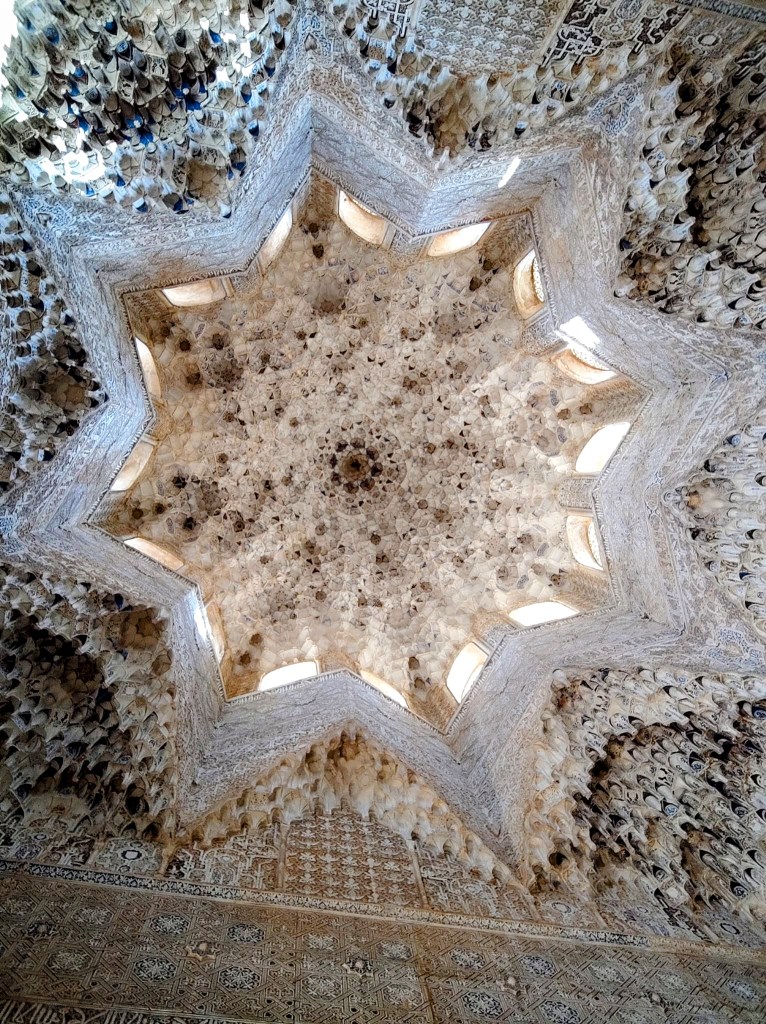
The true legacy of Al-Andalus shouldn’t just be found in history books or the architecture of Granada and the whole of Andalucia. Instead, it should be found in our ability to work together despite differing beliefs. In 2026, the world is more connected yet more divided than ever.
We don’t need to “save” each other; we need to respect each other. We should appreciate different cultures not because it is “polite,” but because, as history shows, the most prosperous eras of human existence have occurred when we stopped building walls and started building libraries.
And why am I so interested in this topic?
Answer is quite simple: I am currently deep in the research and writing of my next novel: An LGBT love story set during the final years of Al-Andalus. While this blog post looks at the politics and the “big” history, my novel dives into the quiet, personal lives of those who lived through the fall of the Alhambra. It explores how intimacy and identity survive when the world you know is being dismantled by the Reconquista. You better follow my blog to find out when “Habibi” is published! Meanwhile, you can assist a fledgling author by purchasing my debut novel, “Buried Hearts” here.
I would also appreciate your help with keeping me caffeinated by Buying Me A Coffee. This is a great way to support your favourite blogger and content creator.




 Travelling Thoughts
Leave a reply to Tolerance or Acceptance? – Who Would Have Thought… Cancel reply